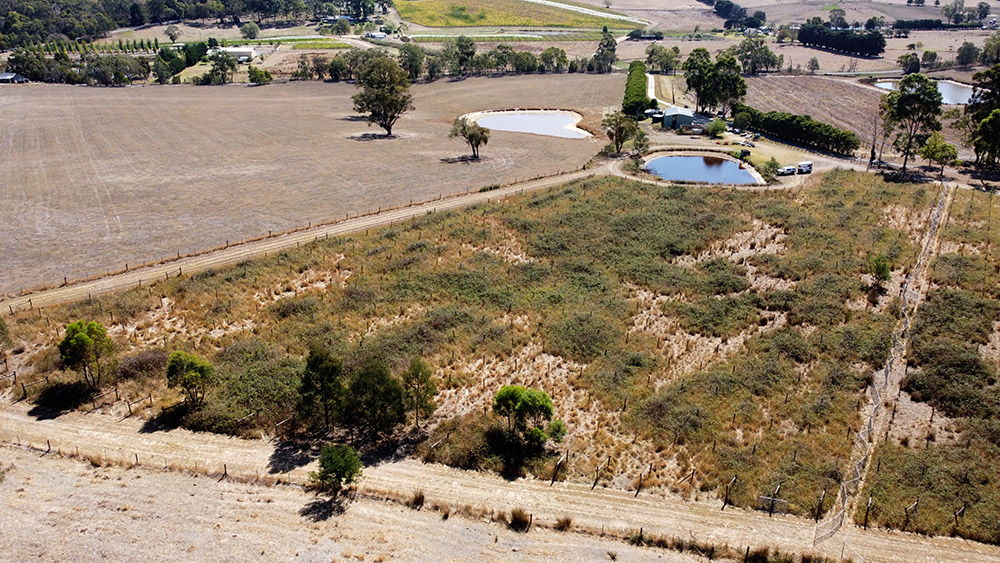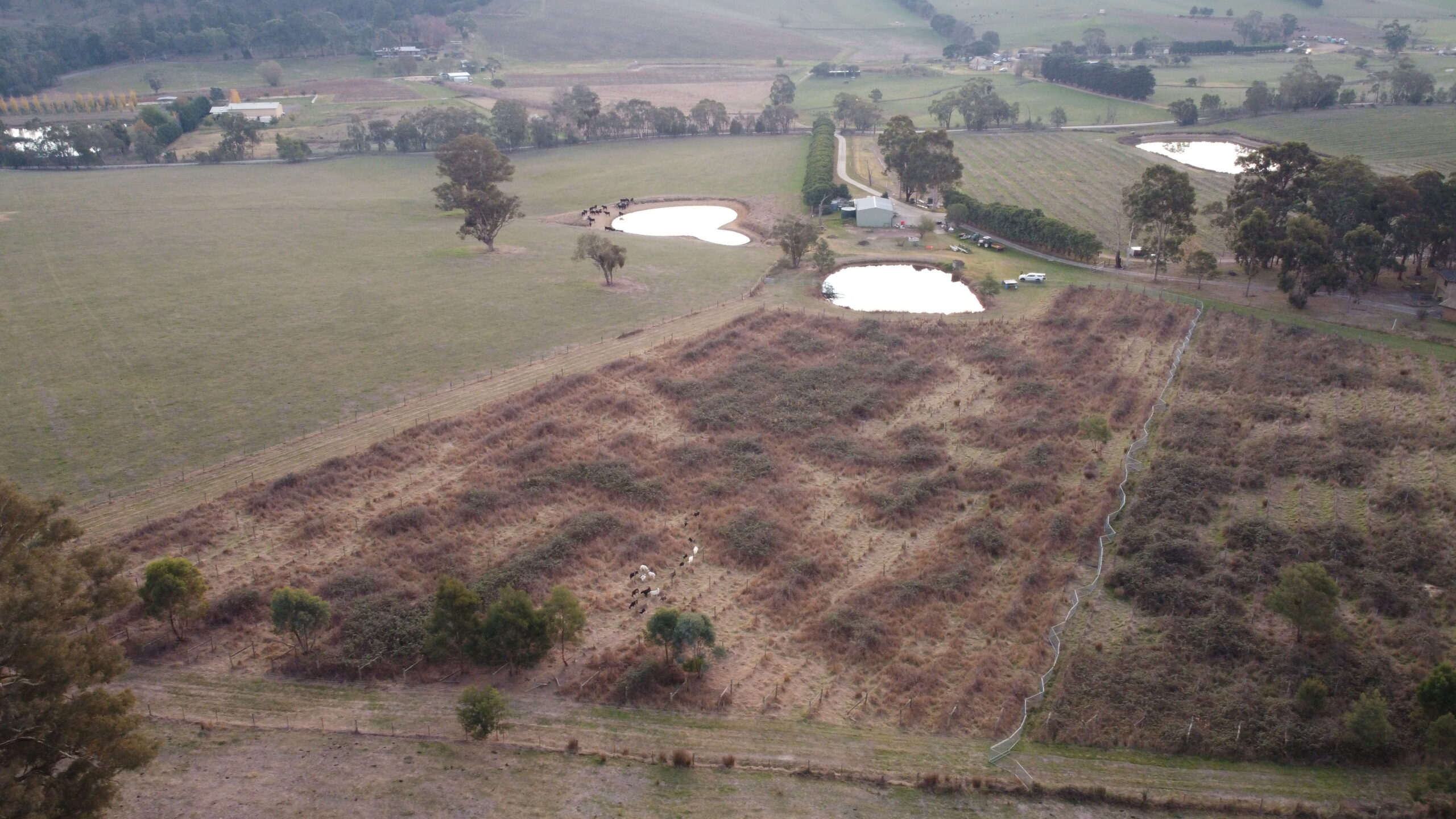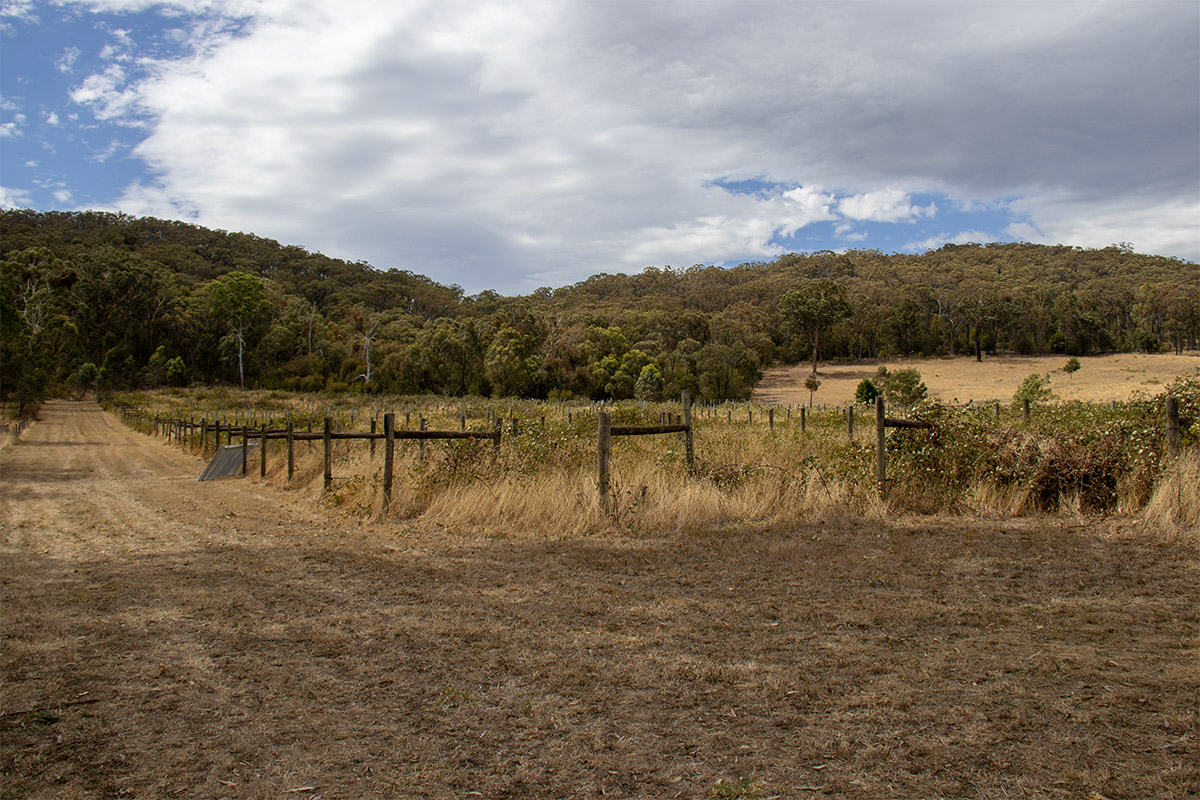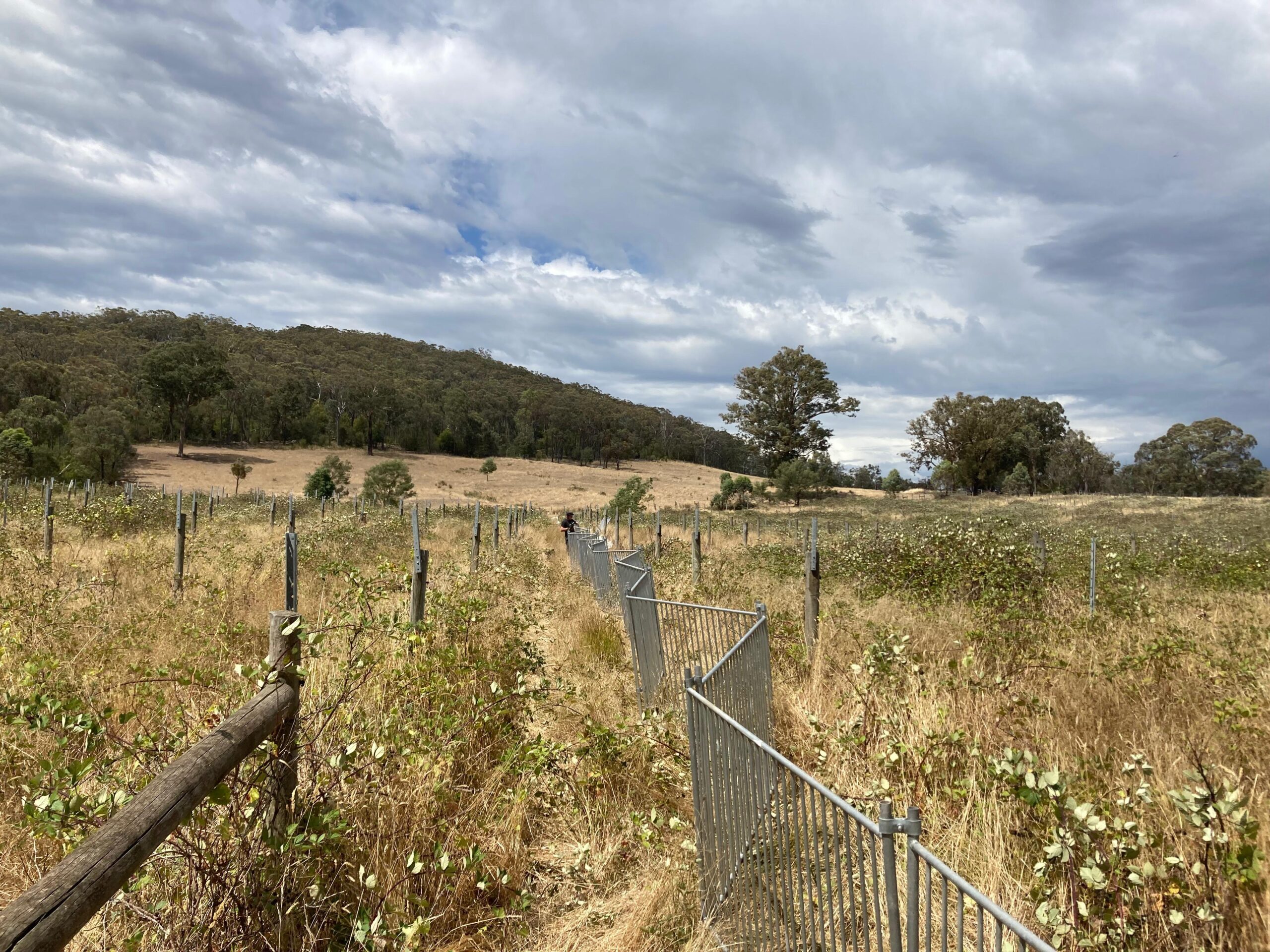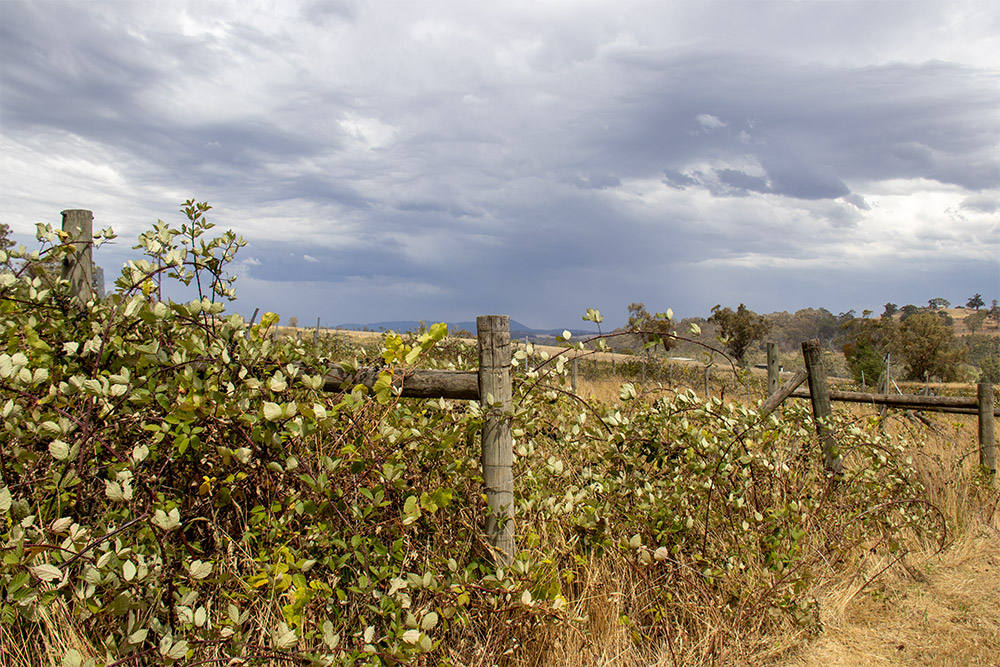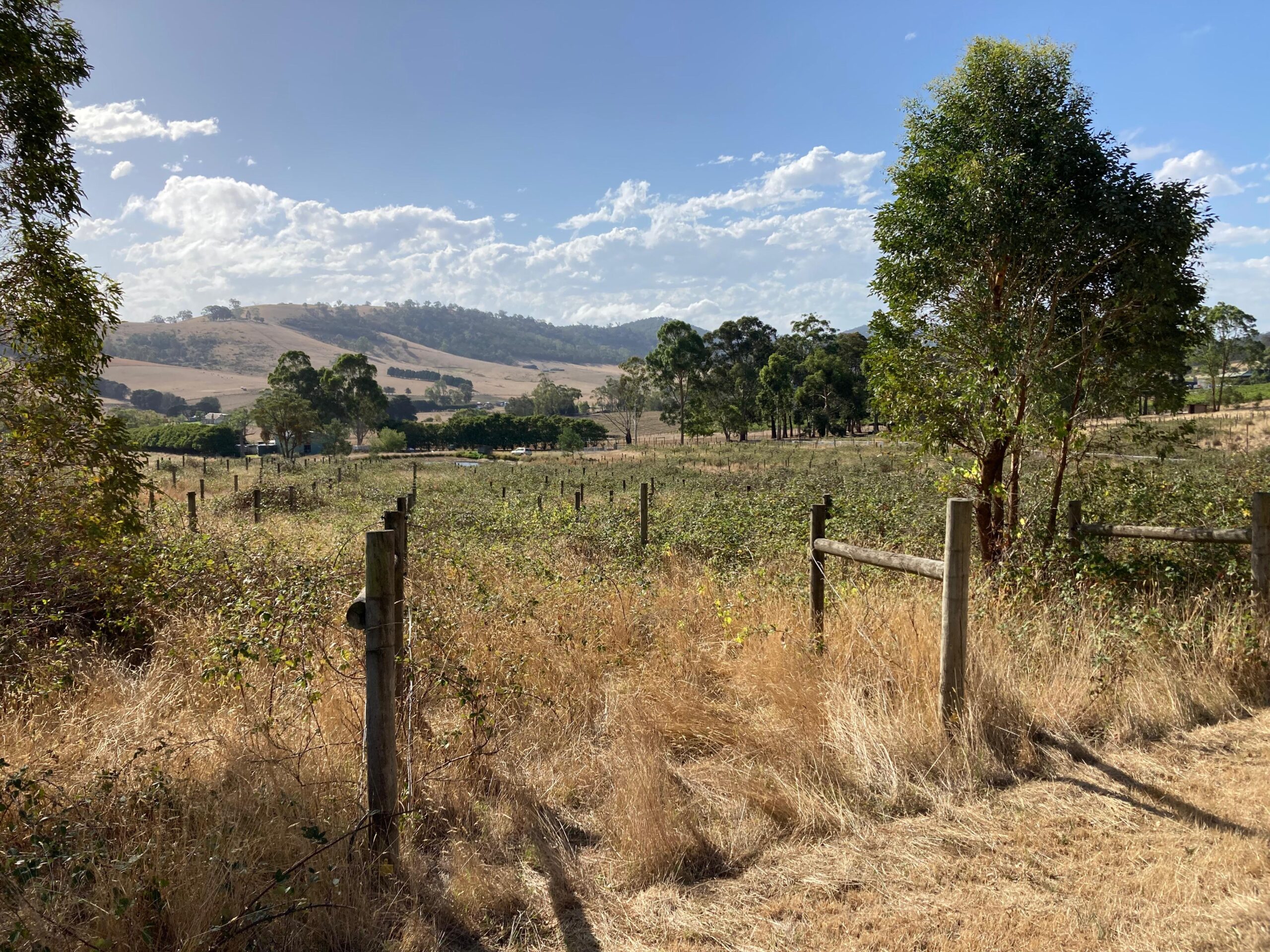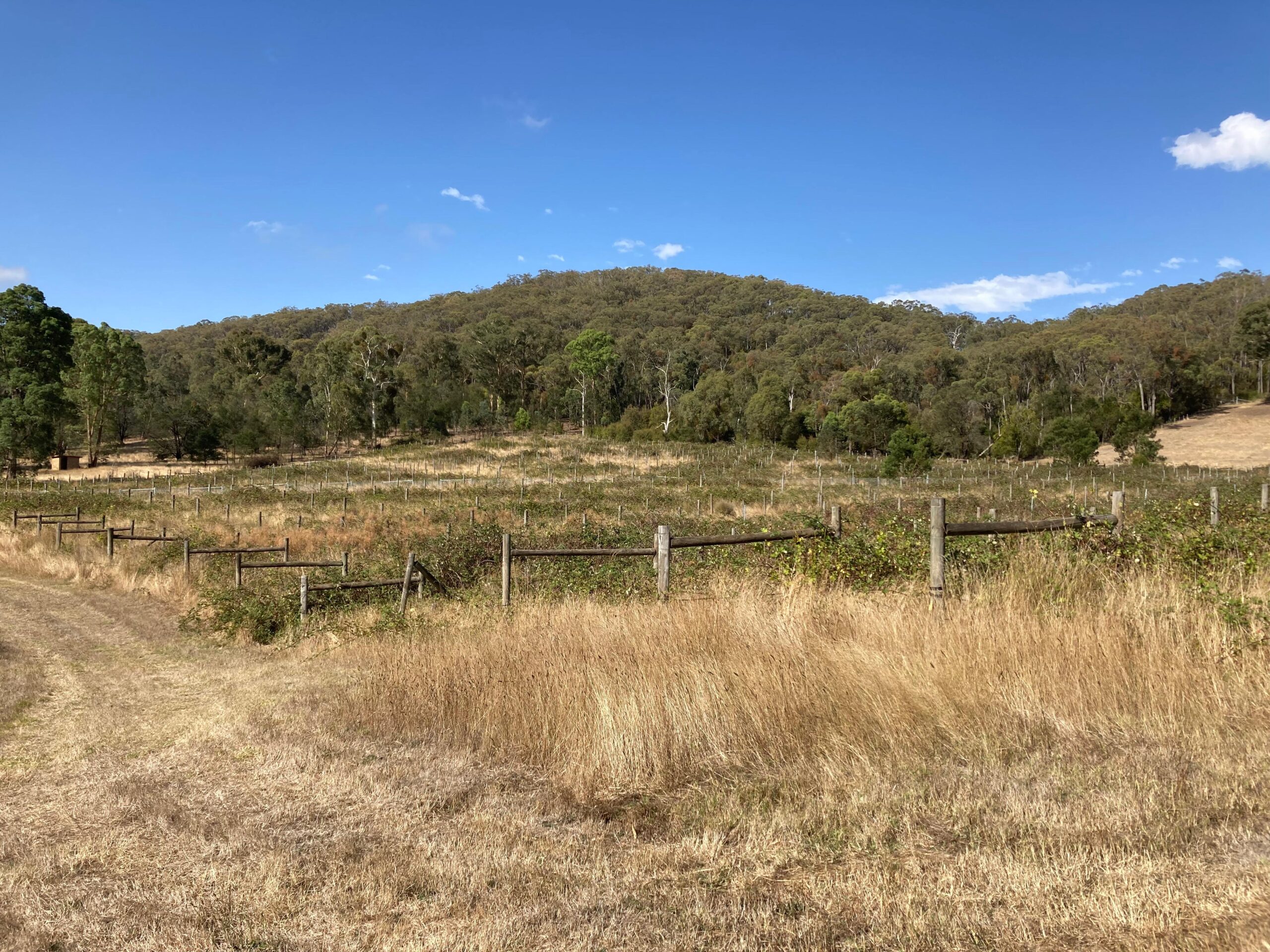
This Healesville site had originally been scheduled for vineyard removal, with trellis wires laid down in preparation. When the removal didn’t proceed, the block was quickly overtaken by dense blackberry thickets and long grass.
The result:
- Hidden vineyard infrastructure beneath thick vegetation
- Unsafe conditions for tractor slashing
- Limited access across the site
- Significant fire risk and declining land usability
Traditional machinery based methods were not suitable due to the risk of damaging buried or concealed vineyard infrastructure .
Our Approach: Goats First, Machines Second
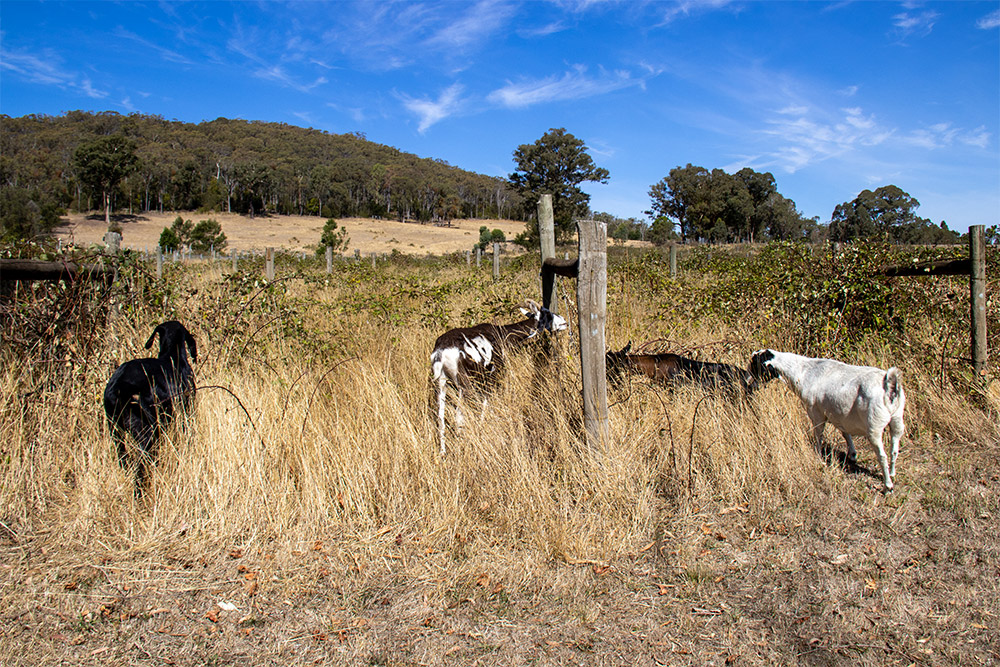
Operation Regeneration deployed targeted goat grazing as a low-impact, precision solution.
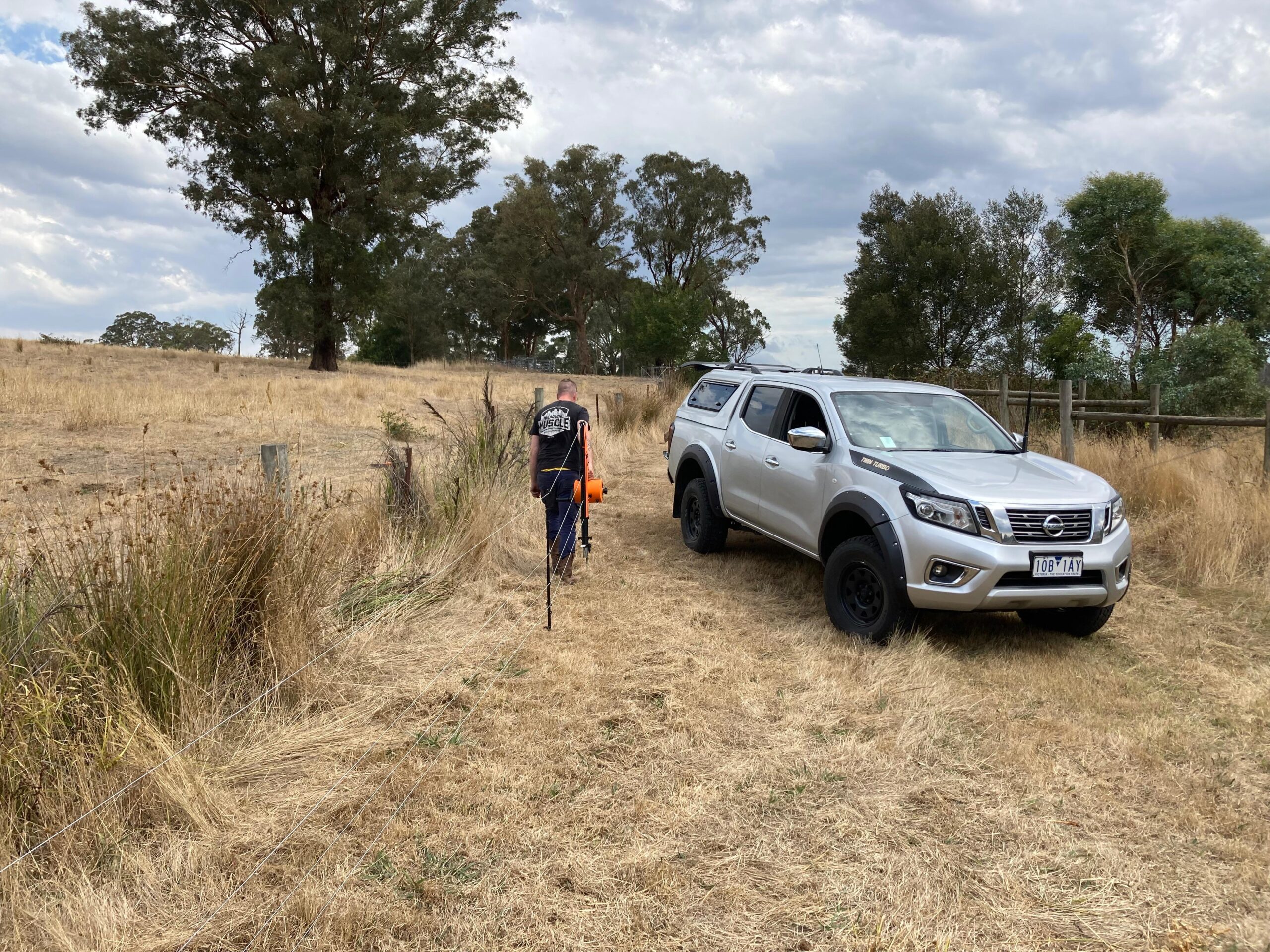
Using a combination of temporary fencing and advanced electric netting systems, we:
- Divided the block into controlled grazing cells
- Reduced dense blackberry and grass biomass
- Tested innovative electric fence configurations
- Monitored goat behaviour to refine containment systems
This project also served as a live trial to improve electric fencing efficiency — aiming to reduce labour inputs and long-term costs for similar infrastructure-heavy sites.
What We Learned
The smart electric fencing system worked effectively in containing the herd and allowing targeted vegetation control. However, real-world conditions revealed some important challenges:
Electrical performance
- Vegetation contact caused occasional shorting
- Battery drainage increased under heavy growth
- Dry conditions reduced earthing effectiveness
Wildlife interaction
- Wombats dug beneath fence lines
- Smaller goats occasionally escaped through burrows
- Regular monitoring and fence adjustments were required
These insights now inform how we design fence layouts, grounding systems, and monitoring schedules for future projects.
Final Stage: Mechanical Consolidation
Once the goats had significantly reduced the biomass, the site became accessible for machinery.
A small bulldozer was used to consolidate and push up remaining blackberry material, completing the primary clearance phase. The staged approach biological reduction followed by mechanical clean-up proved highly effective.
Ecological Insight: Habitat Matters
One of the most important takeaways from this project was ecological balance.
While blackberry removal was necessary for land productivity and long-term management, the thickets had also provided shelter and movement corridors for small native wildlife.
Future projects of this nature should consider:
- Establishing native shelter belts
- Creating habitat corridors
- Implementing staged vegetation transitions
- Replacing invasive thickets with structured indigenous plantings